Concerns About the Student Assignment Project
Update as of July 2026: The Student Assignment Project as originally planned has changed. DeKalb County School District is pivoting to redistricting with possible school closures to accommodate the new Sequoyah cluster.
The original concerns with SAP as related to Henderson Mill Elementary are largely still valid in the face of potential closure due to redistricting. Read more below.
Families in our community have two groups of key concerns about the proposed SAP plan:
All concerns are the result of serious questions by community members about whether these decisions affecting thousands of students are being made with transparency, valid data, and the careful planning our students and communities deserve.
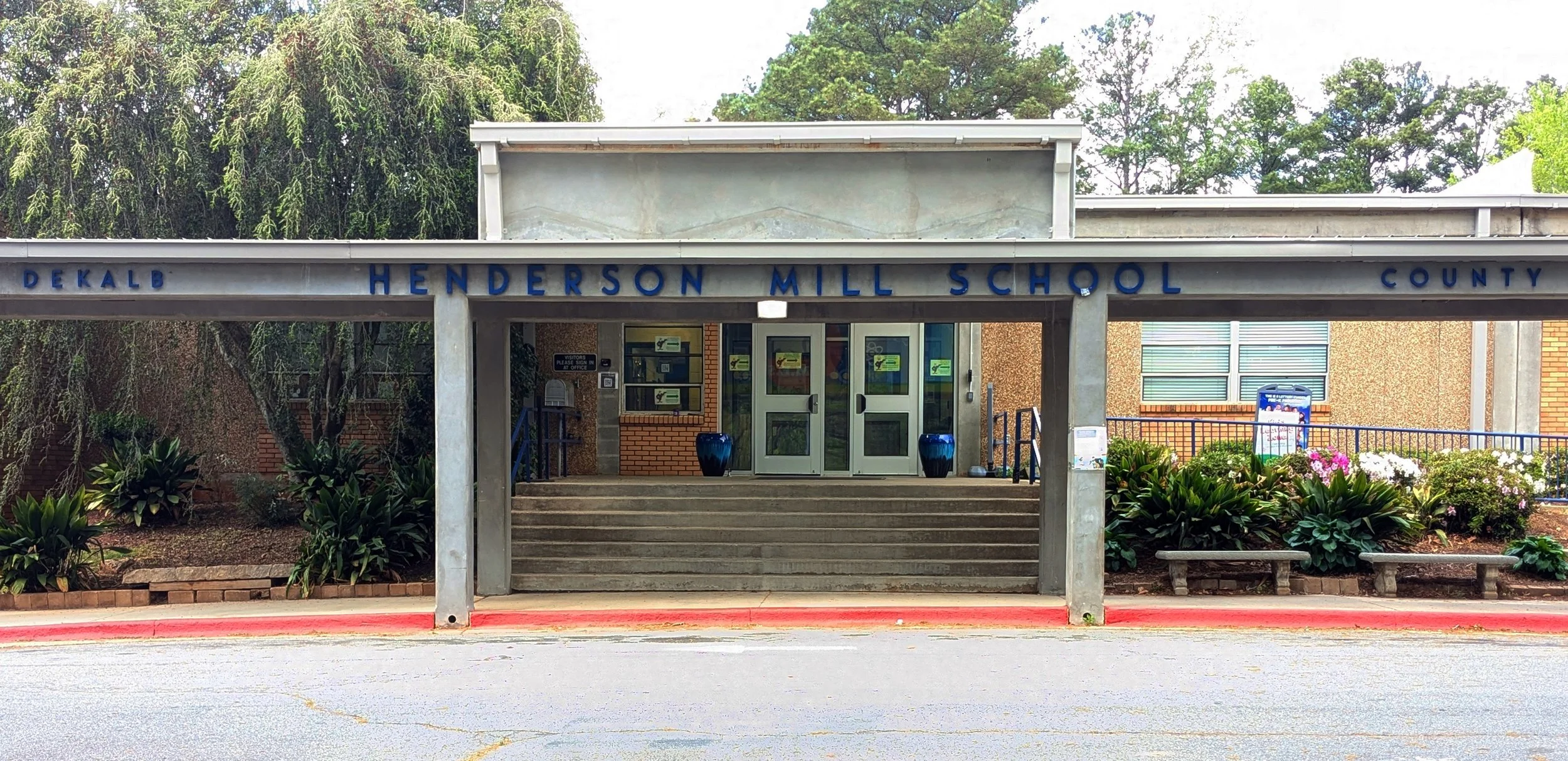
Concerns Specific to Henderson Mill Elementary School
1. Loss of a Unique STEAM Program
Henderson Mill Elementary School is Georgia’s first STEAM-certified elementary school. That distinction sets us apart from all other DeKalb County Public Schools. With that distinction we have:
A dedicated STEAM teacher working with every class
School-wide integration of STEAM and project-based learning
Partnerships with the Alliance Theatre
Special programs like STEAM Day, Science is for Everyone, and more
Most importantly, every student at Henderson Mill participates in STEAM programming.
DeKalb County School District’s SAP plan has not explained whether the STEAM program would continue elsewhere, how it would be replicated in another facility, nor has DCSD quantified what our students would lose in the transition to another school.
2. Uncertainty about the future of our school community
Where will students be reassigned?
How will our students fit into other elementary schools that are already at or near capacity?
Will the Henderson Mill community be split across multiple schools?
What will happen to the school building if it closes? How will DCSD ensure it doesn’t become a blight on the neighborhood?
Families are being asked to react to an incomplete plan without knowing what it actually means for their children. They’re also being asked to react to a plan that hasn’t been determined to be realistically feasible.
Families still don’t have clear answers about what will happen to Henderson Mill Elementary. The Phase 2 scenarios did not provide clear answers, only directional arrows toward nearby schools, which the district later clarified were not definitive assignments.
3. Transportation and daily impact on students
Transportation in DCSD is already a well-known challenge and this plan could make it worse. Research has shown that longer school commutes are associated with higher absenteeism.
Some students are already at bus stops as early as 6:15 a.m.
Longer distances could mean even earlier pickup times and school days rivaling the hours of a full time job
Lack of transportation and traffic studies by DCSD means we can’t know if pick-up and drop-off within a realistic timeframe is even possible on the roads of another neighborhood school burdened with hundreds of additional students
4. Questionable facility assessment of Henderson Mill
The facility condition reports used to evaluate Henderson Mill raise serious concerns.
Only a portion of schools appear to have been assessed in person
The Henderson Mill Facility Condition Assessment was based solely on data from a historical 2015 report and a consultant life cycle “model”, without on-site assessment or review by an architect, engineer, or building scientist.
Some conditions labeled “critical” have already been addressed or are overstated. For example, we have newly renovated bathrooms and the sidewalks and parking areas that are in moderate-to-good condition were marked as in critical need of repair
Concerns with the building may be based on outdated or inaccurate information.
5. Disruption to teachers, staff and community
Henderson Mill Elementary School is a deeply connected community with strong relationships between students, teachers and families. Many of our faculty even are parents at the school.
There are no clear answers about:
Whether teachers and staff would stay together
Whether students would remain with their peers
How this community would be preserved if split apart
6. Confusing and inconsistent student enrollment projections
The school district’s projections for Henderson Mill Elementary School’s future enrollment do not align with actual data:
Current enrollment: 475
Projected for 2026: 550
Actual enrollment data for 2026: 496
Where is this data coming from and why does it not match reality?
If Henderson Mill’s enrollment is so far off, how reliable are the district-wide numbers and projections?
If they are overestimating by 9% just one year in the future, how reliable are their numbers for 2030 enrollment and beyond?
Concerns with the SAP Process
Focus on buildings, not students
A school system’s main priority should be education. The fact that SAP is a facilities first process is a problem because it doesn’t take into account the many other factors that make up a thriving school community and positive educational outcomes.
The SAP process also strongly focuses on the size of facilities - even going so far as to penalize smaller schools simply because of their size, without clearly demonstrating with research the effect of larger schools on students.
Issues with building adequacy scores and facility condition assessments
The building adequacy scores use questionable data and an unclear scoring system that is biased against smaller schools.
Schools on larger lots are rated higher, despite there being no evaluation of the actual usable land area or ability to feasibly expand the school buildings.
Approximately 60% of the DCSD schools were not physically visited during the facility condition assessments.
Facilities assessment reports were not prepared in accordance with widely accepted industry standards.
Rapid pace of SAP process
The timeline for decision-making for the SAP process is extremely compressed. There is not enough time for:
Proper impact studies
Community input
Considering school programming needs and effects on staffing
The scope of the proposed changes is significant and careful considerations should be made before making irreversible, expensive decisions.
Track record of HPM consulting firm
The district built hired HPM, a construction program management firm, to guide the SAP process, raising concerns about potential conflicts of interest.
HPM’s core business is managing large-scale construction projects, which may create an incentive to favor solutions that involve new builds or major redevelopment rather than more cost-effective alternatives.
Leadership tied to HPM has also been involved in similar efforts in other districts that have resulted in controversial closures, cost overruns or community pushback.
No clear financial justification
The district has not clearly demonstrated:
Whether school closures actually save money
The cost difference between modernization vs. rebuilding schools
The financial impact of proposed changes and disruptions
Meanwhile, administrative spending has more than doubled from 2019 - 2024 and properties purchased by DCSD remain unused.
NO traffic, environmental, community impact or transportation studies
There has been a lack of critical impact studies to determine if decisions for school closures are even feasible.
How will additional students at neighborhood schools impact traffic in those neighborhoods?
How will DCSD ensure students can access reliable, timely transportation to school?
Is it even possible to expand certain schools? How can that be done without disruption to the students already attending those schools?
How will school expansions impact utilities?
How does a closed school building impact the safety of the community living around it?
Schools are being recommended for closure without knowing the full scope, cost, and effects to the community.
Lack of school board and leadership accountability
This process is moving forward during a period of significant leadership change at DeKalb County School District.
There is currently no permanent superintendent in place.
3 out of 7 Board of Education seats are up for election.
How can we trust decisions of this magnitude when those making the decisions will have no accountability for the ramifications of those decisions?
Alternatives to school closures were never discussed
There was not adequate public input into possible alternatives to school closures nor has the reasoning for school closures - stated as low enrollment - resonated with the district as a whole.
What other alternatives could have been considered to reduce spending?
Questionable external influence
It’s no secret that the SAP process was championed by the former superintendent who has been indicted on 17 federal counts tied to alleged embezzlement, wire fraud and tax fraud related to his prior leadership in the Evanston-Skokie school district in Illinois. These charges are related to contracts kickback schemes.
Excess capacity problem was created by the district
The district built excess capacity. Approximately 111,000 seats for 100,000 students, in fact. Communities, particularly in South DeKalb, are now being asked to absorb the consequences of long-term planning decisions they did not make.